

Growth through Shared Catalogs & Onboarder
- News
Creating strong, dynamic product experiences is not something you can easily set up yourself. However, we are happy to help you.

You see something and get inspired. You go online and start searching, based on descriptions. Soon, you give up because your results don’t give you what you want.
Experience teaches us that there are still many brands that only process product information in long descriptions, that do not offer filtering and/or search options, or continue to upload products without matching information.
Missing or incomplete product information makes it difficult to find a product. And that is exactly what most consumers have become allergic to. In this blog, we explain how your brand can retain potential consumers and attract them to you based on your product information.

Everyone preaches that it is a must to better organise and regulate your critical information in your product catalogue. However, the reality around mandatory fields and their implementation is more complicated.
Product catalogues today are enormously extensive. On the one hand, it is a challenge to guarantee the integrity of such large amounts of data. On the other hand, you have more and more competitive retailers. They must rely on product data that meets both the requirements of the customer and those of constantly changing search algorithms.
To validate the presence of product information and ensure completion, you must:
Most brands offer a diverse range of products with different product characteristics. For example, a department store sells white trainers, as well as dry cat food and different types of smartphones. The information consumers want for each of these products is very different. Nevertheless, they should be included in the same catalogue. So always start by defining what information your consumers need.
A well-built product catalogue may have hundreds – even thousands – of attributes. When these are well organised and classified based on product type structures with unique requirements per product type, you can proceed responsibly. Align your mandatory fields with the unique requirements of each product type – that is the basis of everything.
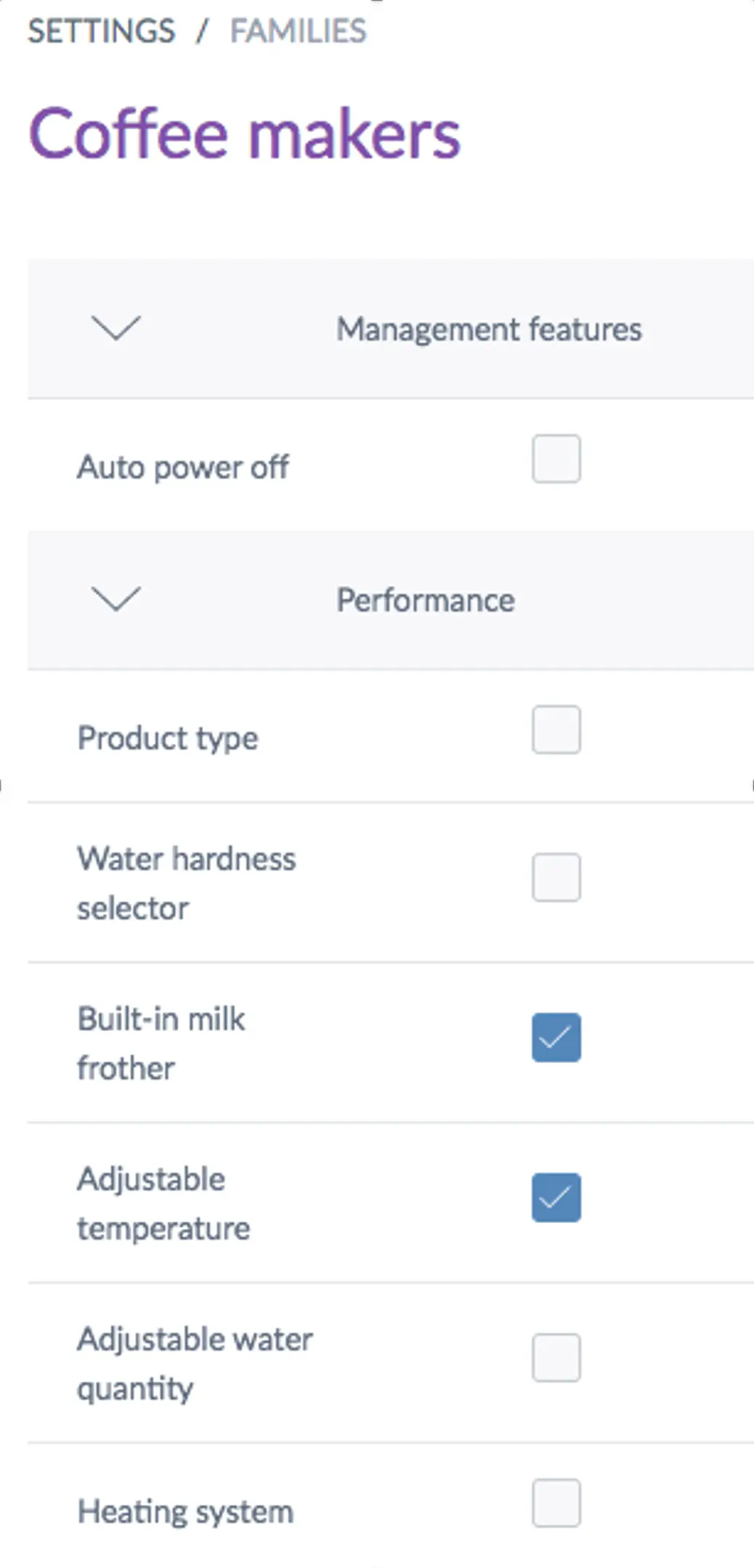
A catalogue of 100,000 products with 50 attribute fields has 5,000,000 data points that need to be set up and checked. An almost unconquerable effort when your product information is spread across multiple sources, each with their own truth. Think of an ERP, e-commerce website or even Excel spreadsheets.
We are happy to help you set up and implement a PIM system that does the heavy lifting in this endeavour.
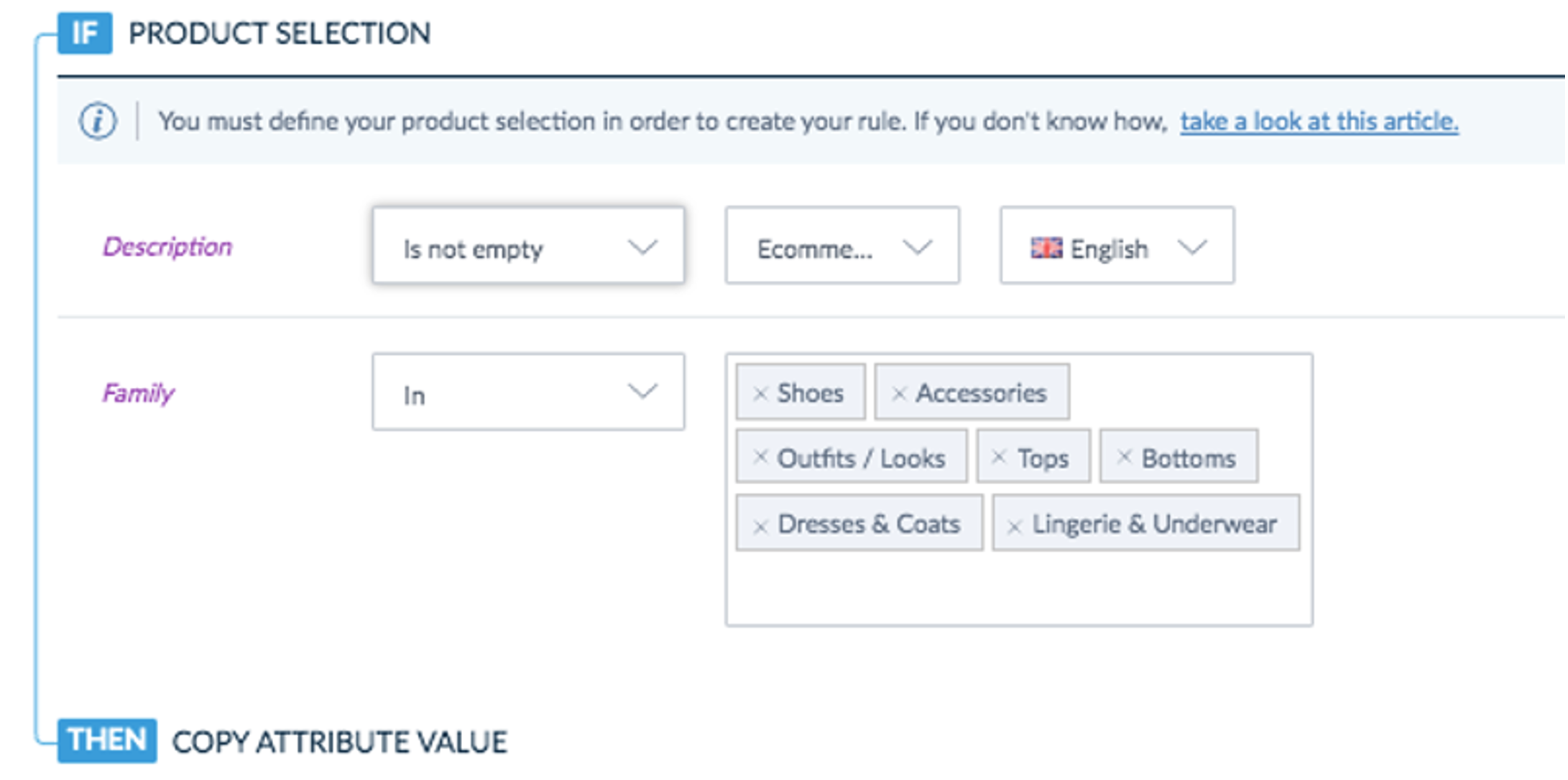
Next, we look for the missing information and focus on productivity tools, automation and solutions that enable your suppliers to fill in the missing information.
When consumers get to the product they want quickly and easily, we talk about a positive user experience. When consumers can rely on validated information without having to validate or compare, you build customer retention. High-quality data makes consumers buy repeatedly, whereas bad data usually costs you a sale.
Rich content, SEO optimisation and merchandising are inherently dependent on complete and accurate product data. Brands that invest in complete product information therefore experience a positive ripple effect. We help you to exceed your customers’ expectations and provide more than enough convincing information. We help your visitors find what they are looking for on your e-commerce site, creating brand ambassadors.
Contact us or see our approach.
Creating strong, dynamic product experiences is not something you can easily set up yourself. However, we are happy to help you.

With the test you will gain insight into the strengths & weaknesses of your PIM setup so we can optimize your custom PIM system.

Induxx is participating in the Akeneo PIM summit digital even Unlock 2021 and has a chance to win 3 awards for Akeneo Enterprise and Community